Selling your EV faster in 2026 is not about luck. It is about listing quality, local pricing discipline, and buyer trust.
Most private sellers lose time for the same reasons:
- Price is not aligned with local comps
- Photos do not build trust quickly
- Listing details are incomplete
- Response speed is too slow
If you fix these four areas, message volume and lead quality usually improve fast.
This checklist is built for private sellers who want serious buyer conversations, not endless low-ball offers.
Quick Reality Check: What Buyers Want Before They Message
Before contacting you, buyers usually evaluate:
- Is this priced reasonably for the local market?
- Do the photos look complete and honest?
- Can I trust this seller from the listing details?
- Will this car fit my commute, range, and budget?
Your listing should answer these questions directly. If not, buyers move on.
Step 1) Price for Your Local Market, Not Headlines
The fastest way to lose serious buyers is pricing from old headlines or non-comparable listings.
Build your comp set using:
- Same year/model/trim
- Similar mileage band
- Same title status (clean vs salvage)
- Similar condition and feature level
- Local market listings buyers can actually visit
Set three numbers before publishing:
- Asking price (public)
- Target price (realistic close)
- Walk-away floor (minimum accepted)
Read: How to Price Your Used EV in 2026
Step 2) Make the Vehicle Listing-Ready (Trust Starts Here)
You do not need a showroom detail job, but your EV should look cared for and transparent.
Pre-list checklist:
- Clean exterior and interior
- Remove personal clutter
- Check tire condition visibility
- Gather charging accessories included in sale
- Confirm title status and service notes
Buyers read condition through details. Small prep work often prevents negotiation penalties later.
Step 3) Use a Complete EV Photo Set
Good photos increase both click-through and message quality. Weak photos force buyers to assume risk.
Minimum must-have shots:
- Front/rear/side exterior
- Interior front and rear
- Odometer and range screen
- Cargo area
- Wheels/tires
- Any flaws (transparent disclosure)
Plan-aware media on EvValley:
- Basic: up to 6 photos
- Standard: up to 15 photos + 1 short video (<60s)
- Premium: up to 25 photos + 1 short video (<60s)
Read: Best Photos for an EV Listing
Step 4) Write a Listing Description Buyers Can Trust
Vague descriptions reduce messages. Specific, honest descriptions increase confidence.
Use this format:
- Year / make / model / trim
- Mileage
- Battery/range notes (realistic)
- Charging accessories included
- Title status
- Condition notes (including flaws)
- Recent maintenance/service highlights
If buyers feel you are hiding details, they usually skip the message.
Step 5) Publish Where Buyers Can Act Immediately
Your listing should make it easy for qualified buyers to move from browsing to messaging.
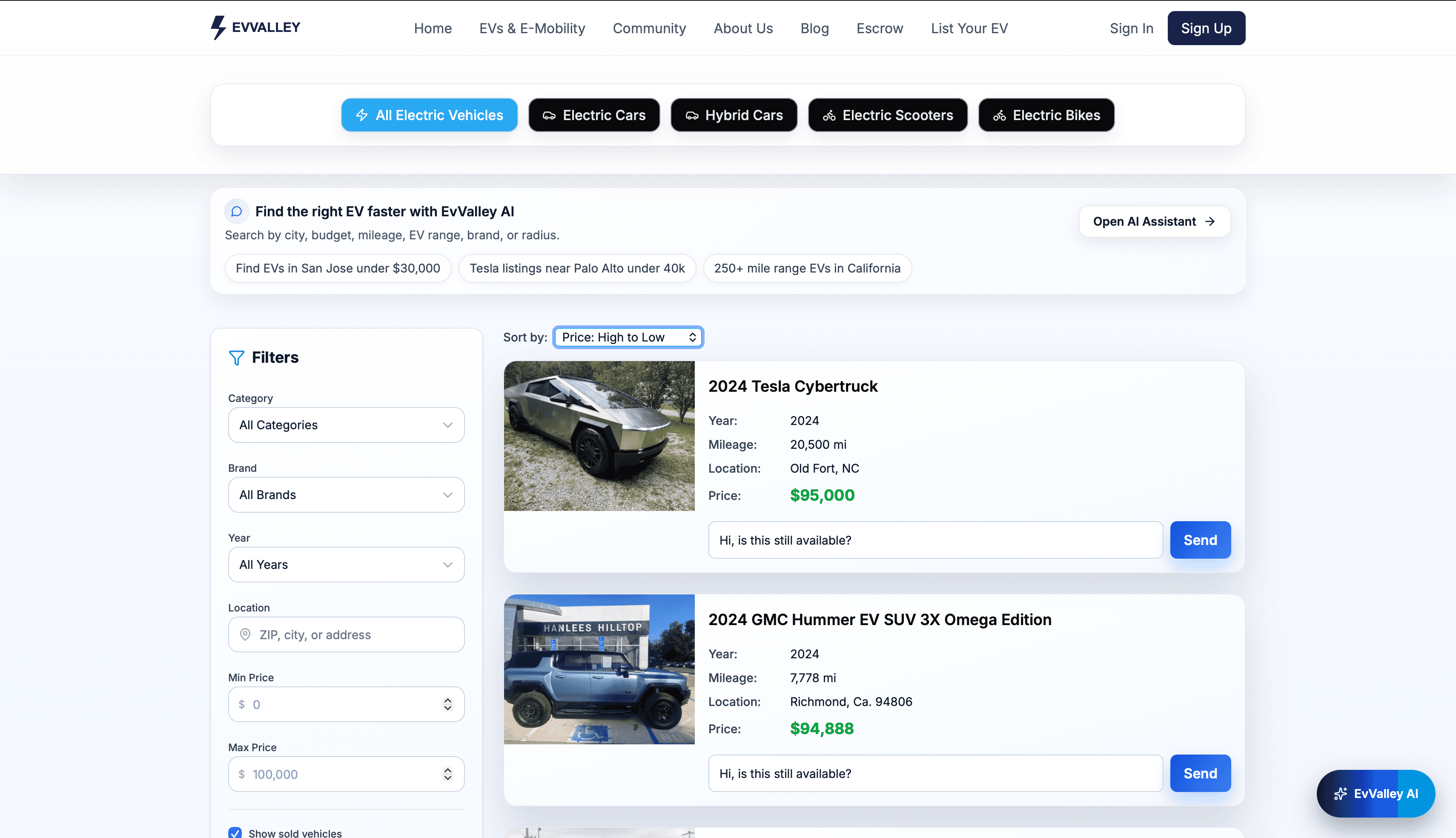
On EvValley, optimize for action:
- Clear title and clean cover image
- Complete specs and condition details
- Fast response once first messages arrive
Step 6) Reply Fast (Speed Changes Outcomes)
Even a strong listing can underperform if response speed is slow.
Best practice:
- Reply within 5-15 minutes when possible
- Answer with specific details, not one-line replies
- Suggest next step quickly (call/window to inspect/test drive)
Fast, clear replies filter serious buyers from tire-kickers sooner.
Step 7) If You Get Views But No Messages, Fix in This Order
- Re-check price against local comps
- Improve first 5 photos + EV-specific proof shots
- Add missing details (trim/range/title/condition)
- Then consider a measured price adjustment
Do not panic-discount before fixing listing quality. That often reduces margin without solving trust issues.
Read: Why EV Listings Don’t Get Messages
Step 8) Use Boost Strategically (After Listing Quality Is Strong)
Boost works best when your listing quality is already good. Visibility alone cannot fix weak pricing or weak photos.
Use boost when:
- Your listing is complete and trust-ready
- You want top placement for faster attention
- You are in a competitive local market
For best results: quality first, then visibility acceleration.
Private Seller EV Checklist (Copy/Paste)
- Set asking/target/floor prices using local comps
- Prepare car and remove visual friction
- Upload complete EV photo set
- Include odometer/range/title/condition details
- Publish with clear CTA-ready listing quality
- Respond fast to incoming buyers
- Improve weak areas before major price cuts
Final Takeaway
If you want to sell your EV faster in 2026, your results come from three levers:
- Correct local pricing
- Trust-building media and details
- Fast, high-quality buyer response
Most sellers who improve these three areas see better message quality and faster deal flow.
Start your EV listing on EvValley
Frequently Asked Questions
How long should it take to sell an EV privately?
It depends on local demand, pricing, and listing quality. Well-priced listings with strong photos and clear details generally move faster than vague listings at similar prices.
Should I lower price immediately if I get no messages?
Not immediately. First improve photos, details, and trust signals. Then re-evaluate local comp positioning before making a measured adjustment.
Do EV-specific details really matter in listings?
Yes. EV buyers often care about range context, charging accessories, battery confidence, and title transparency. Missing these details can reduce inquiry rates.
Is boost useful for private sellers?
Yes, but mostly after listing fundamentals are strong. Boost increases visibility; it does not replace accurate pricing or complete listing quality.
Sources and References
- Kelley Blue Book: My Car's Value
- Kelley Blue Book: Values FAQ
- Edmunds Appraisal Tool
- NHTSA Recalls Lookup
- FTC Consumer Advice: Used Cars
This article is general seller education, not legal or appraisal advice. Actual sale timelines and prices vary by condition, market, and vehicle configuration.