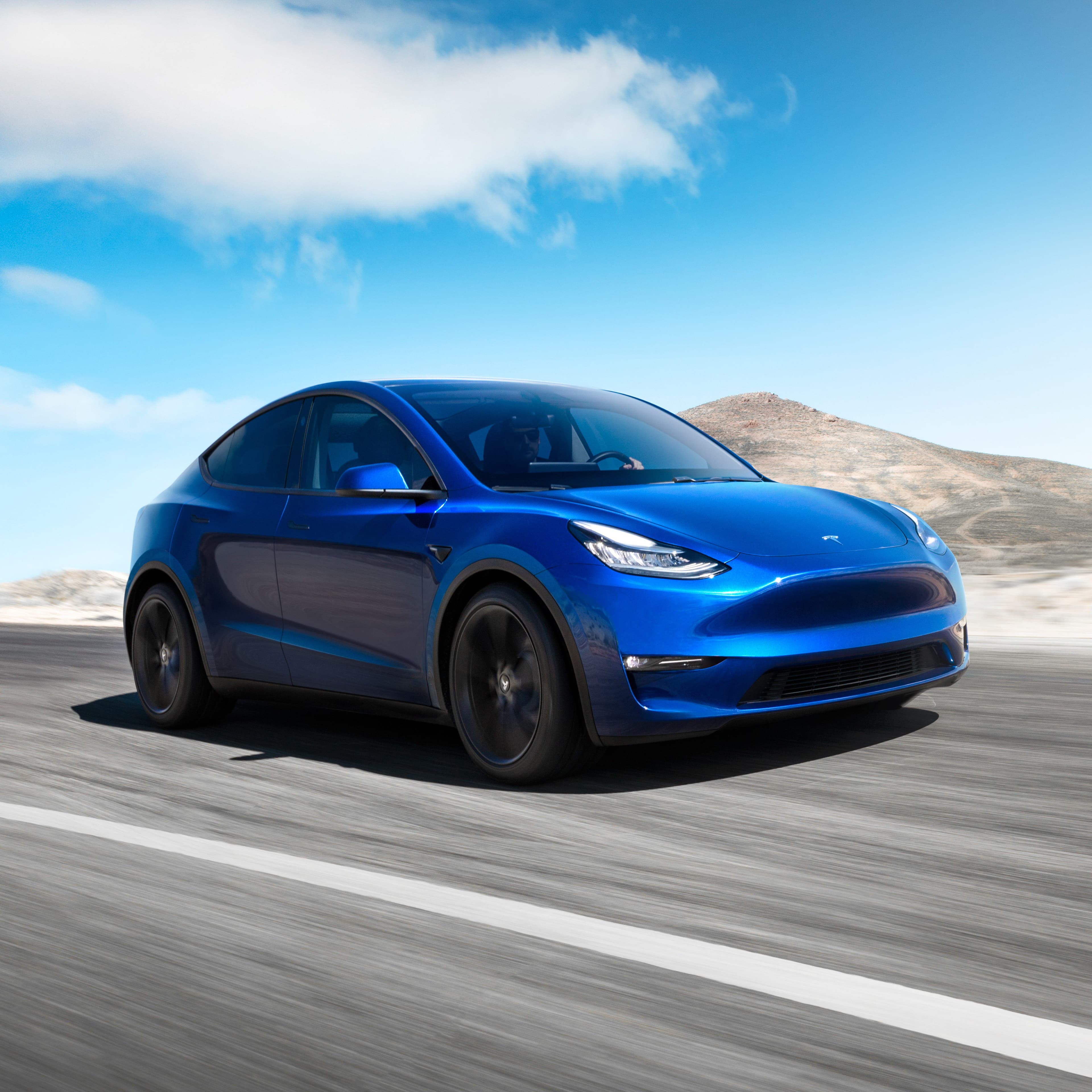
Tesla Model Y reached customers for the first time in March 2020, and in just a few years it became one of the most successful vehicles in modern automotive history.
What started as Tesla’s compact electric SUV quickly grew into the world’s best-selling EV and, in 2023, the best-selling vehicle overall across all powertrains. Very few vehicles have scaled that quickly on a global level.
When Did the Tesla Model Y Launch?
Tesla first unveiled the Model Y in March 2019. Production began in January 2020 at Tesla’s Fremont factory in California, and first customer deliveries started in March 2020.
Since launch, Tesla has expanded Model Y production across multiple factories:
- Fremont, California
- Gigafactory Shanghai, China
- Gigafactory Berlin-Brandenburg, Germany
- Gigafactory Texas, United States
This factory footprint was one of the biggest reasons Tesla could scale Model Y production so quickly worldwide.
How Many Tesla Model Y Vehicles Have Been Sold?
Because Tesla reports Model 3 and Model Y deliveries together, exact global Model Y totals are estimated by analysts and registration trackers rather than reported directly by Tesla.
Widely cited market estimates place Model Y global sales at roughly:
- 2021: about 396,000 units
- 2022: about 759,579 units
- 2023: about 1.15 million units
- 2024: about 1.09 million units
That means the Model Y had likely cleared 3.4 million global sales by the end of 2024, even before counting early 2020 launch deliveries in full.
Why 2023 Was a Historic Year
In 2023, the Tesla Model Y became the best-selling vehicle in the world, not just the top-selling EV. That was a major milestone because it meant an all-electric SUV outsold long-dominant gasoline nameplates such as the Toyota Corolla.
That achievement marked a turning point in the global car market and showed that EV demand had moved far beyond early-adopter territory.
Why the Tesla Model Y Became So Popular
Several factors helped the Model Y become so dominant globally:
- Strong range and real-world usability
- Access to Tesla’s Supercharger network
- SUV practicality with quick acceleration
- Over-the-air software updates
- Competitive pricing relative to many premium EV rivals
- Shared engineering with the Model 3, which helped Tesla scale production efficiently
The Model Y hit a sweet spot in the market: enough space for families, enough performance for enthusiasts, and enough efficiency for daily use.
The Global Production Advantage
Tesla’s ability to build Model Y in North America, China, and Europe gave it a major advantage. Localized production reduced shipping costs, improved delivery speed, and helped Tesla respond faster to demand in key regions.
That global manufacturing strategy turned the Model Y into Tesla’s most important volume product.
What Comes Next for the Tesla Model Y?
Tesla continues to expand and refresh the Model Y lineup globally. Newer versions, including refreshed trims and the longer-wheelbase Model Y L in some markets, are designed to improve interior space, comfort, and efficiency.
Even as competition increases, the Model Y remains one of the most influential EVs in the world and continues to shape expectations for electric SUVs.
Final Thoughts
The Tesla Model Y did more than become a successful EV. It changed what the industry now considers possible for electric vehicles at scale.
From its March 2020 launch to its record-setting sales run, the Model Y became proof that an electric SUV could be practical, global, and dominant all at once.
Explore now: EV listings, List your EV, EvValley homepage.