Range Rover has officially entered the fully electric era.
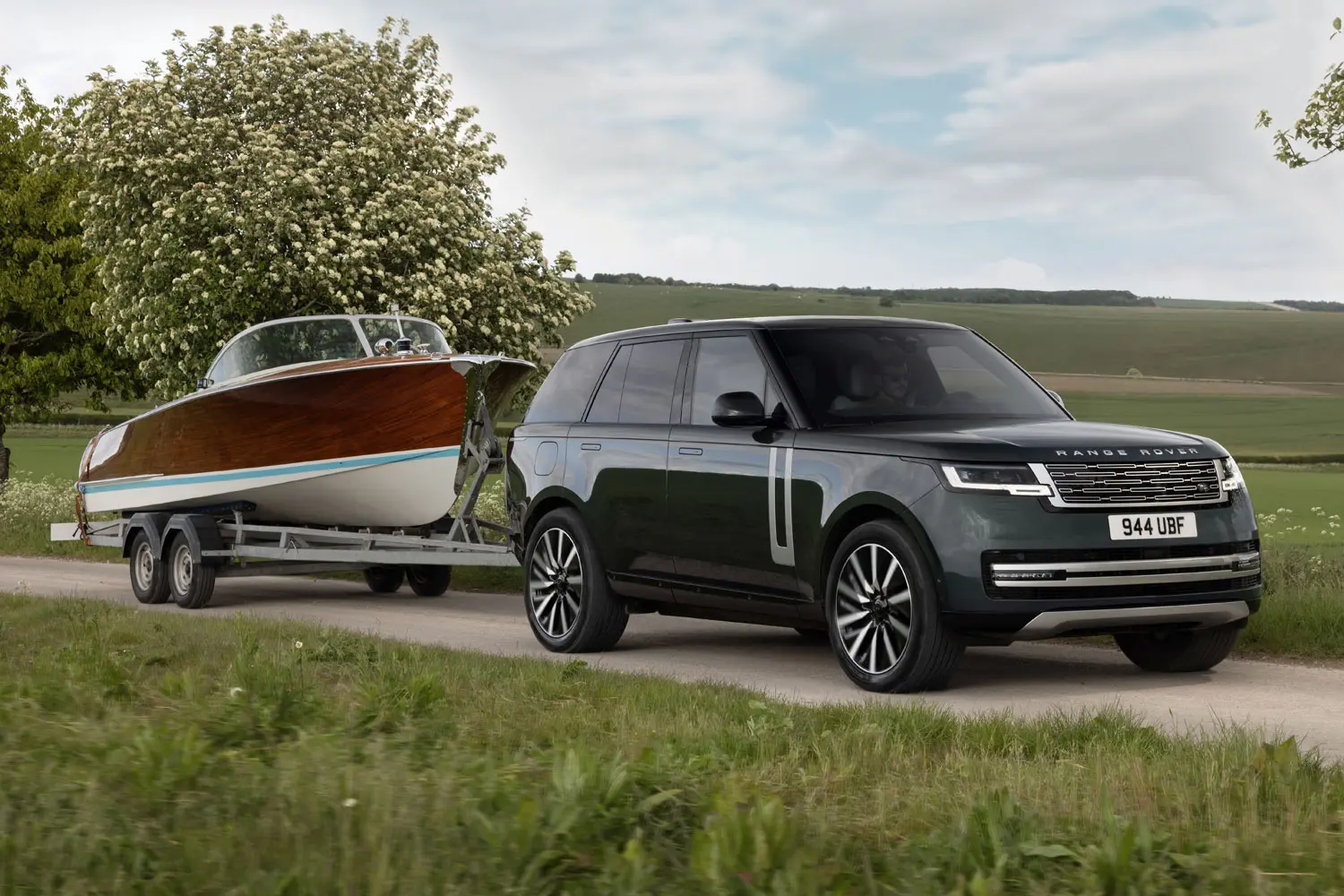
The first all-electric Range Rover has been revealed for the 2027 model year. Instead of completely reinventing its flagship SUV, JLR has taken a more measured approach: preserving the familiar Range Rover experience while replacing the traditional powertrain with a fully electric system.
That means recognizable design, premium comfort and serious all-terrain capability, now combined with 542 horsepower, a usable 118.5-kWh battery and an estimated real-world driving range of up to 333 miles.
A Range Rover First and an EV Second
JLR describes the vehicle’s development philosophy as being a “Range Rover first and electric second.”
The company clearly wanted to avoid making the electric version feel disconnected from the vehicle loyal customers already know. Its overall shape remains almost identical to the combustion-powered Range Rover, with only subtle changes introduced to improve aerodynamic efficiency.
Those changes include:
- An aerodynamically optimized front grille
- EV-specific wheel designs
- A smoother and more carefully managed underbody
- Revised airflow around the exterior
- No visible exhaust outlets
The strategy makes sense. Traditional Range Rover customers are not necessarily looking for a futuristic spaceship. They expect presence, refinement, comfort, status and genuine off-road capability.
The electric model aims to preserve those qualities while making the driving experience quieter, smoother and more responsive.
Power, Battery and Charging
The 2027 Range Rover Electric uses two permanent-magnet electric motors, with one mounted at the front and another at the rear.
Each motor produces up to 260 kW. Together, the system delivers 550 PS, equivalent to approximately 542 horsepower, along with 850 Nm, or roughly 627 lb-ft of torque.
JLR says the electric SUV can accelerate from 0 to 60 mph in as little as 4.3 seconds.
| Specification | 2027 Range Rover Electric |
|---|---|
| Power | 542 hp |
| Torque | 627 lb-ft |
| Battery | 118.5 kWh usable |
| Battery cells | 344 prismatic cells |
| Electrical architecture | 800 volts |
| WLTP range | Up to 372 miles |
| Estimated real-world range | Up to 333 miles |
| 0–60 mph | As little as 4.3 seconds |
| DC fast charging | 10% to 80% in 22 minutes |
| 10-minute charging gain | Up to 137 miles WLTP |
| Drivetrain | Dual-motor all-wheel drive |
800-Volt Fast-Charging Technology
The charging system is one of the Range Rover Electric’s most important technical features.
Its 800-volt architecture supports DC fast-charging speeds of up to 350 kW. Under ideal conditions, JLR says the battery can charge from 10% to 80% in approximately 22 minutes.
The vehicle can also add up to 137 miles of WLTP driving range in 10 minutes when connected to a compatible charger at its maximum charging rate.
Actual charging performance will depend on battery temperature, charger capability, weather conditions and the battery’s state of charge.
Built for Real Range Rover Capability
The most important question surrounding an electric Range Rover is not simply how far it can travel or how quickly it accelerates.
It is whether the vehicle can still deliver the off-road capability associated with the Range Rover name.
JLR says the electric model has completed more than 1.5 million kilometers of physical testing and over 250,000 hours of virtual testing, making it one of the most extensively tested Range Rover models to date.
Development took place in environments including:
- Extreme cold in Arjeplog, Sweden
- Desert heat in Dubai
- Low-grip surfaces and difficult terrain
- High-speed paved roads
- JLR’s Eastnor Castle off-road facility in the United Kingdom
The Range Rover Electric can wade through up to 900 millimeters, or approximately 35 inches, of water.
Its Integrated Traction Management system can react to wheel slip in as little as 50 milliseconds. According to JLR, that is approximately 100 times faster than the equivalent system in a combustion-powered vehicle.
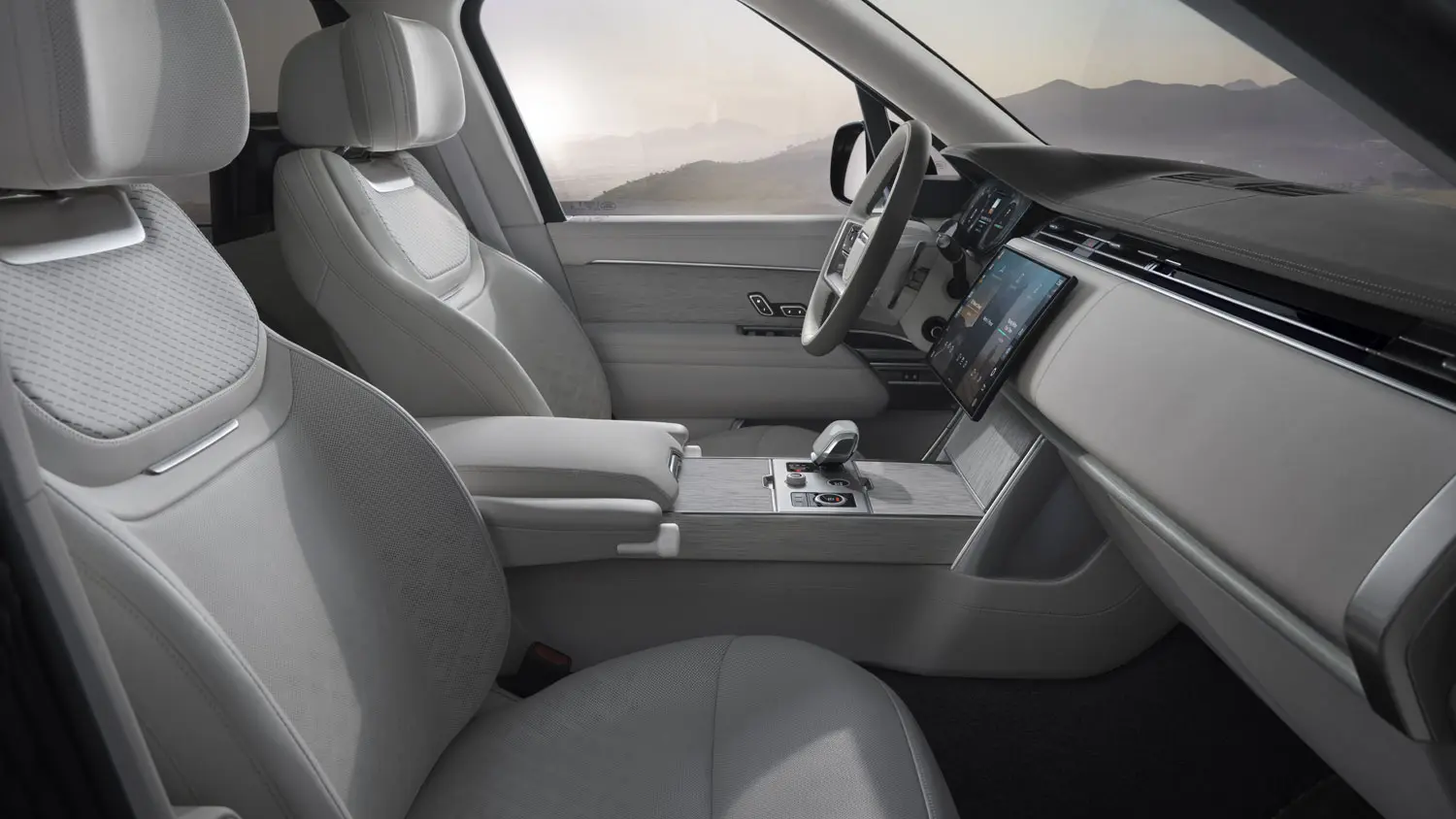
Single-Pedal Control Goes Off-Road
Single-pedal driving is normally associated with urban traffic and regenerative braking, but Range Rover has adapted the technology for off-road use.
The new Single Pedal mode is designed to give drivers more precise control while navigating difficult terrain. JLR says it can help the SUV pull away smoothly on inclines of up to 33 degrees and complete rolling climbs on slopes reaching 45 degrees.
The system allows the driver to control acceleration and deceleration primarily through the accelerator pedal, reducing the need to move constantly between the accelerator and brake while climbing or descending.
Tesla Supercharger Access in North America
Charging access is another major part of the ownership experience.
JLR says Range Rover Electric customers in North America will receive access to the Tesla Supercharger network through built-in NACS compatibility.
Native NACS support removes the additional step of carrying a separate adapter for compatible charging locations and gives the vehicle access to one of North America’s largest and most established fast-charging networks.
That is particularly important for a large luxury SUV. Maximum range matters, but reliable and convenient charging access can be just as important during long-distance travel.
Technology Designed Around Battery Longevity
The Range Rover Electric introduces several technologies intended to improve battery performance, efficiency and long-term maintenance.
JLR’s ThermAssist heat-management system is designed to optimize driving range, charging speed and battery longevity in extreme temperatures. The company says the technology can add up to 25 miles of range while reducing heating energy consumption by as much as 40% under certain conditions.
Each vehicle also includes a Battery Digital Twin that monitors more than 900 diagnostic data points. Combined with over-the-air software capability, the system is designed to help identify maintenance requirements before they become larger problems.
The electric powertrain is covered by an eight-year or 100,000-mile warranty, subject to market-specific terms.
Production and Pricing
The Range Rover Electric will be manufactured in Solihull, United Kingdom, where Range Rover vehicles have been produced since 1970.
JLR has adapted the facility so electric, mild-hybrid, plug-in hybrid and combustion-powered models can be manufactured using the same flexible vehicle architecture.
Order books are already open in the United Kingdom, where pricing begins at £154,070 on the road.
In the United States, early published pricing starts at approximately $140,550, although the final cost will vary depending on trim, wheelbase, destination fees and optional equipment.
A curated First Edition will also be available with exclusive equipment and a choice of Belgravia Green, Santorini Black or Varesine Blue exterior colors.
Why the Range Rover Electric Matters
The Range Rover Electric arrives as luxury EV buyers become increasingly selective.
Battery power alone is no longer enough to make a premium electric vehicle competitive. Buyers now expect strong range, rapid charging, high-quality software, comfort, recognizable design and a clear brand identity.
That is where this model becomes important.
Range Rover is not attempting to copy Tesla or position the vehicle as a direct alternative to Rivian. Instead, it is protecting the characteristics that made the Range Rover valuable while introducing an electric powertrain underneath them.
Final Thoughts
The 2027 Range Rover Electric is not trying to be the loudest or most radical EV introduction of the year.
It is attempting to make electrification feel natural for one of the world’s most recognizable luxury SUVs.
With 542 horsepower, up to 333 miles of estimated real-world range, fast 800-volt charging, native NACS compatibility and serious off-road technology, the Range Rover Electric represents a careful but significant step forward.
For buyers who want a fully electric luxury SUV without giving up the traditional Range Rover experience, this could become one of the most important premium EVs arriving for 2027.
Follow the latest electric SUV launches, charging developments and EV market news on EvValley. ⚡️
Browse EV listings | List your EV | Read more EV news | Visit EvValley