If you are comparing Tesla vs Rivian in 2026, you are likely deciding between two very different EV ownership experiences.
Tesla is the mainstream EV benchmark for efficiency, software, and broad product coverage across sedans, crossovers, luxury vehicles, and trucks. Rivian is more focused on premium, utility-first electric SUVs and trucks designed around outdoor use, cargo flexibility, and adventure-ready capability.
The short answer:
- Choose Tesla if you prioritize lower entry pricing, efficiency, and a wider lineup (especially Model 3 and Model Y).
- Choose Rivian if you prioritize utility, space, truck/SUV capability, and a premium adventure-focused ownership fit.
This is not a one-size-fits-all comparison. The right choice depends on your budget, cargo needs, charging habits, and whether you want a commuter-friendly EV or a more capable SUV/truck platform.
Quick Answer: Tesla or Rivian?
Choose Tesla if you want:
- Lower entry pricing (especially Model 3 / Model Y)
- Strong efficiency and everyday commuting value
- A broader vehicle lineup across price points
- A more mainstream EV ownership path
- More options in the used EV market
Choose Rivian if you want:
- A premium electric SUV or truck experience
- More cargo and utility for gear-heavy use
- A lifestyle fit built around road trips and outdoor driving
- Truck/SUV capability as a priority
- A more distinctive, premium utility-first EV brand
This Is Not a Perfect Apples-to-Apples Comparison
Tesla and Rivian overlap, but not equally across the lineup.
Tesla lineup (U.S.)
- Model 3 (sedan)
- Model Y (crossover SUV)
- Model S / Model X (higher-end sedan/SUV)
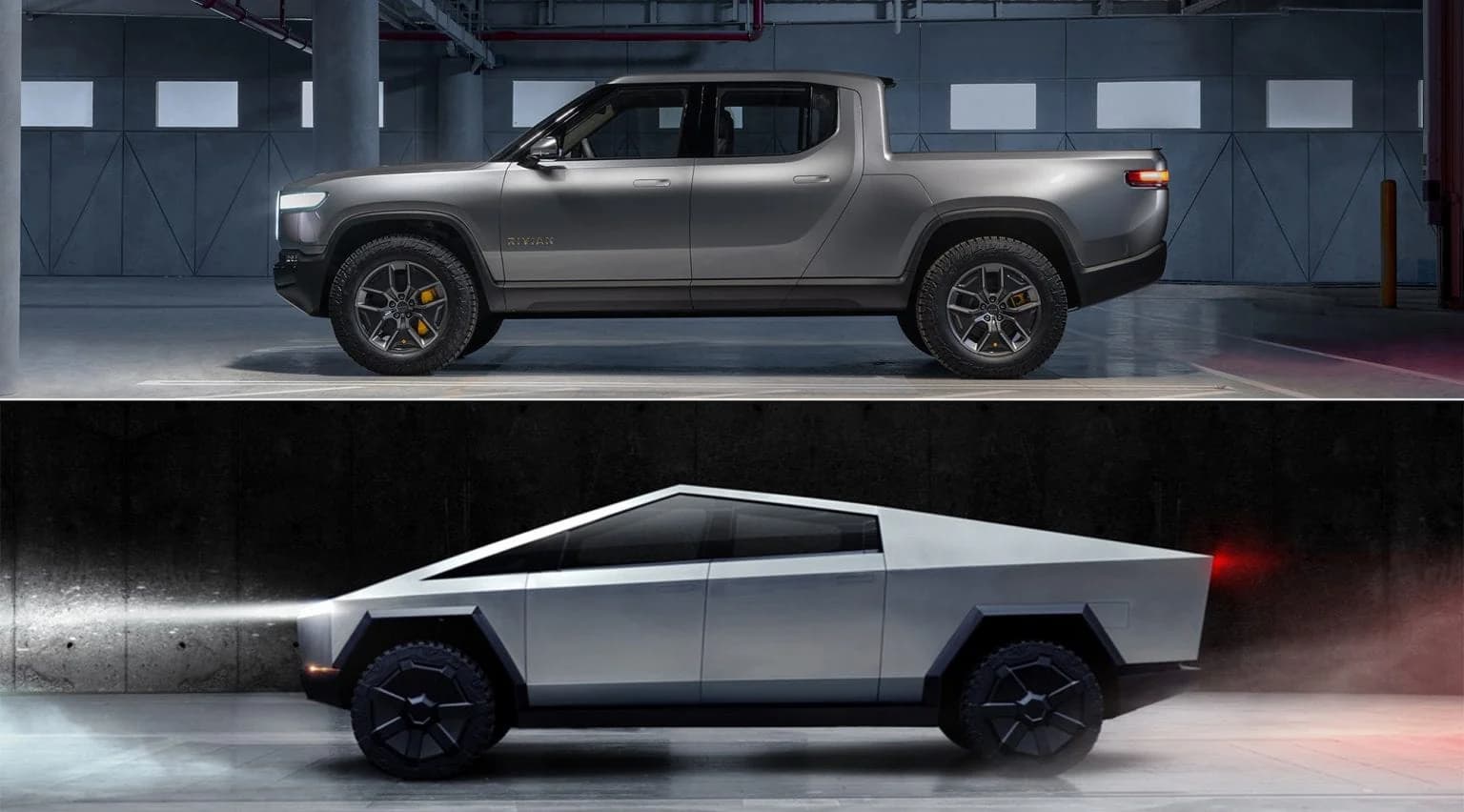
- Cybertruck (pickup truck)
Rivian consumer lineup
- R1S (SUV)
- R1T (pickup truck)
So in real shopping decisions, the comparisons usually look like this:
- Model Y vs R1S (SUV buyers)
- Cybertruck vs R1T (truck buyers)
- Model 3 vs Rivian? Usually only if you are choosing between a lower-cost commuter EV and a premium utility EV
Price: Tesla Usually Wins on Entry Price
As of February 24, 2026, Tesla's official comparison page lists significantly lower entry pricing for Model 3 and Model Y than Rivian's R1S and R1T examples shown on Rivian's charging page.
Tesla (official compare page, U.S.)
- Model 3 Rear-Wheel Drive starts at $38,630
- Model Y Rear-Wheel Drive starts at $41,630
- Model Y Performance AWD starts at $59,130
- Cybertruck Dual Motor AWD starts at $62,235
Rivian (official charging page examples)
- R1S example shows Starting at $76,990
- R1T example shows Starting at $72,990
Note: Tesla and Rivian pricing can change by trim, options, and timing. Always verify current official pricing before publishing or buying.
Price takeaway: If your budget is under roughly $60,000, Tesla gives you more realistic entry points. If you are shopping in the premium truck/SUV range, Rivian becomes much more relevant.
Charging and Road Trips: Tesla's Historical Advantage Is Smaller in 2026
This is one of the biggest changes in EV shopping. Tesla still has a major charging advantage in user familiarity and ecosystem maturity, but Rivian has reduced the gap significantly.
Rivian charging updates that matter in 2026
- Rivian states that all 2026+ Rivian vehicles have a built-in NACS charge port
- Rivian states you can plug in at over 21,500 Tesla Superchargers
- Rivian also advertises up to 300 kW fast charging and roughly 150 miles in 20 minutes in ideal conditions
Tesla charging reality
Tesla remains a top-tier charging experience, especially for route planning, charger coverage, and integrated navigation behavior. For many buyers, that is still a major reason to choose Tesla.
Charging takeaway: Tesla still leads in overall charging ecosystem familiarity, but Rivian's NACS integration and Supercharger access make Rivian much easier to recommend for road-trip-focused buyers than a few years ago.
Range: Both Brands Are Strong, but for Different Use Cases
Range comparisons need context. Tesla often leads on efficiency in lighter vehicles like the Model 3 and Model Y, while Rivian offers strong range in larger, heavier SUV/truck platforms.
Tesla examples (official Tesla model pages)
- Model 3 examples currently listed up to 363 miles EPA est. (trim dependent)
- Model Y examples currently listed up to 357 miles EPA est. (trim dependent)
Rivian examples (official Rivian charging page footnotes/examples)
- R1S example references up to 410 miles EPA est. (configuration context noted by Rivian)
- R1T example references up to 420 miles EPA est. (configuration context noted by Rivian)
Range takeaway: If you care about range in a large SUV/truck platform, Rivian is very competitive. If you care about efficiency and lower operating cost per mile, Tesla's smaller vehicles are often the better fit.
Daily Use and Lifestyle Fit: This Usually Decides the Purchase
Tesla is usually better for:
- Daily commuting
- Lower cost EV entry
- High-efficiency driving
- Urban and suburban use
- Buyers comparing monthly payment first
Rivian is usually better for:
- Family + cargo + outdoor gear use
- SUV/truck buyers who need utility
- Road trips with more luggage or equipment
- Buyers who prioritize premium truck/SUV capability over efficiency
If you are choosing between a Tesla Model Y and Rivian R1S, your answer often comes down to how often you need the extra space and utility. If you are choosing between a Tesla and Rivian truck, the decision becomes more about size, use case, and brand preference than raw EV capability.
Software and Ownership Experience
Both Tesla and Rivian are more software-focused than many traditional automakers, but the ownership priorities are different.
Tesla owners often prioritize:
- Efficiency and simplicity
- Mainstream EV familiarity
- Strong resale liquidity in many markets
- A broad range of available vehicles (especially used)
Rivian owners often prioritize:
- Utility-first design
- Premium SUV/truck experience
- Outdoor/adventure capability
- A more distinctive ownership identity
This is less about which app is "better" and more about what kind of vehicle life you are building around.
Who Should Buy Tesla in 2026?
Tesla is usually the better fit if you are:
- buying your first EV
- focused on lower purchase price and efficiency
- shopping a commuter-focused EV
- shopping used inventory and wanting more options
- comparing value per dollar closely
Who Should Buy Rivian in 2026?
Rivian is usually the better fit if you are:
- specifically shopping for a premium electric SUV or truck
- willing to pay more for utility and cargo flexibility
- carrying gear frequently
- planning road trips where space and comfort matter
- looking for an EV built around truck/SUV capability
Used Market Tip (Very Important for Buyers)
Brand-level comparisons can be useful, but a real purchase decision usually comes down to the listing in front of you.
A strong-condition Rivian at the right price may be a better buy than an overpriced Tesla. The reverse is also true.
Before deciding, compare real listings on:
- mileage
- trim and battery
- condition
- accident/title history
- tire condition
- ownership notes
- local market pricing
Compare Tesla and Rivian Listings on EvValley
The fastest way to decide is to compare real listings side by side and message sellers with your top questions.
- Browse Tesla and Rivian listings
- Compare price vs mileage in your area
- Message sellers directly about condition, battery health, and charging history
Browse EV Listings on EvValley
Selling a Tesla or Rivian? List on EvValley
If you already own a Tesla or Rivian and want to sell, a strong listing can make a major difference in how many messages you receive.
- Use clear exterior and interior photos
- Include trim and battery/range details
- List mileage clearly
- Mention charging habits and ownership history
- Price against local comps, not national headlines
Final Verdict
Tesla is usually the better fit for buyers prioritizing lower entry pricing, efficiency, and a broader lineup across budgets.
Rivian is usually the better fit for buyers prioritizing premium SUV/truck utility, cargo flexibility, and adventure-focused capability.
The right choice depends on your use case, not brand hype. Compare live listings and message sellers directly to make a better decision than spec-sheet debates alone.
Frequently Asked Questions
Is Tesla cheaper than Rivian in 2026?
Generally yes. Tesla's Model 3 and Model Y start significantly below Rivian's R1S and R1T entry pricing examples shown on Rivian's official charging page.
Can Rivian use Tesla Superchargers in 2026?
Rivian states that all 2026+ Rivian vehicles have a built-in NACS charge port and can access Tesla Superchargers, with adapter details applying to earlier model years.
Which has more range, Tesla or Rivian?
It depends on the vehicle and trim. Rivian advertises very strong range in R1S/R1T configurations, while Tesla often leads on efficiency in smaller vehicles like Model 3 and Model Y.
Is Rivian better than Tesla for families?
If you need more cargo space and utility in an SUV/truck format, Rivian can be a better fit. If you want a lower-cost family EV, Tesla Model Y is often the easier choice.
Sources (Verify Before Publish)
- Tesla Compare (official)
- Tesla Model 3 (official)
- Tesla Model Y (official)
- Rivian Charging (official)
Pricing, trims, charging access, and specifications can change. Verify official sources before publishing.